Is It Safe to Visit Rinca Island with Komodo Dragons?
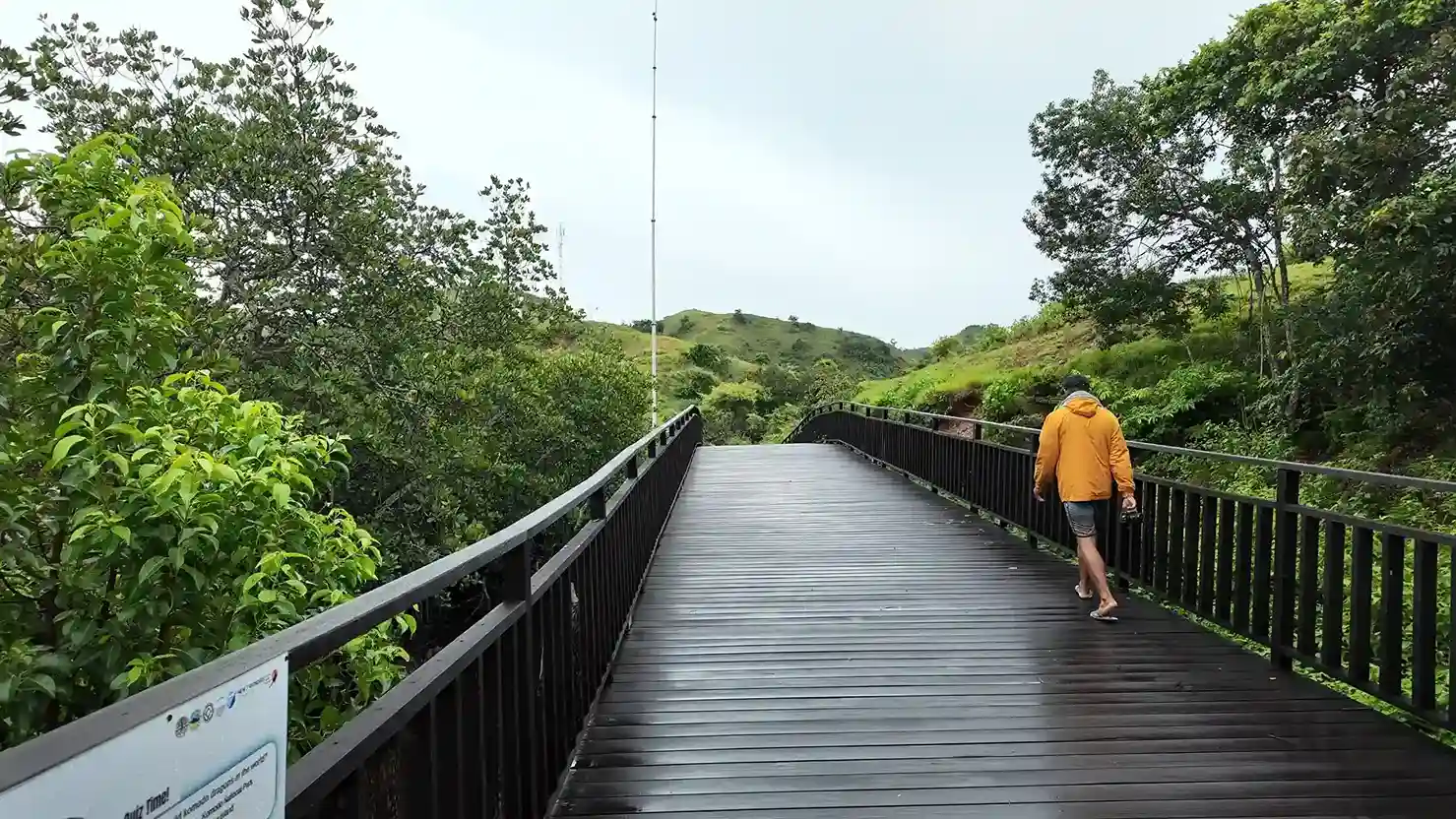
Yes, it is safe to visit Rinca Island and see Komodo dragons, provided you stay with your ranger-led group and follow the ranger’s instructions without exception. Every trek is accompanied by a licensed park ranger who sets viewing distance based on each dragon’s behaviour that day — visitors never approach or interact with a dragon independently.
Last updated: 25 August 2026.
Is It Safe to Visit Rinca Island With Komodo Dragons Nearby?
Komodo dragons are wild apex predators, and treating that fact seriously — rather than downplaying it — is exactly what makes a Rinca visit safe in practice. The park’s entire structure is built around this: no self-guided access, a mandatory licensed ranger for every group, and a set viewing distance the ranger adjusts moment to moment based on the specific animal’s posture and behaviour. Millions of visits have proceeded safely under this system precisely because it takes the risk seriously rather than pretending it doesn’t exist.
What Safety Protocol Do Rangers Follow Around Komodo Dragons?
- Distance first. Rangers keep groups back from any dragon showing alertness, movement toward the group, or unusual behaviour, and allow closer viewing only of calm, resting animals.
- The forked stick. Rangers traditionally carry a long forked stick, used historically to redirect a dragon’s movement at a safe distance if it approaches — a standard park practice rather than a sign of frequent danger.
- Group discipline. Staying together as a group, not wandering off the marked trail, and following instructions immediately are the core visitor responsibilities.
- No feeding, no touching. Feeding or attempting to touch a dragon is strictly prohibited and is exactly the kind of behaviour that turns a normally passive encounter into a dangerous one.
Has Anyone Been Hurt by a Komodo Dragon on Rinca Island?
Komodo dragon attacks on visitors are rare but not unheard of historically across the park, and virtually all documented incidents involve someone breaking from the standard ranger-guided protocol — wandering off the trail, approaching too closely for a photo, or otherwise not following ranger instructions. Sticking with your ranger and group, and not treating a dragon like a photo prop, removes the vast majority of the actual risk.
What Should You Do If a Komodo Dragon Approaches Your Group?
Stay calm, stay with the group, and follow your ranger’s instructions immediately — this is precisely the scenario rangers are trained and equipped for. Do not run, do not try to photograph at close range, and do not separate from the group to get a better angle. The ranger will reposition the group to maintain safe distance.
Is Rinca Island Safe for Families With Children?
Yes, with the same rules applied more attentively — keep children close, within arm’s reach on any section where a dragon is nearby, and brief them beforehand on the “stay with the group, don’t run ahead” rule. Rangers accommodate family groups regularly and will adjust pace accordingly.
Why Do Rangers Carry a Forked Stick?
The forked stick is a longstanding, low-tech tool used to gently redirect a dragon’s head or path of movement at a safe arm’s-length distance if it approaches a group more closely than intended — it is not a weapon and is not used aggressively. Its continued use reflects decades of accumulated ranger experience with dragon behaviour rather than a sign that encounters commonly go wrong; most treks pass without a ranger ever needing to use it.
How Are Ranger Guides Trained for This Work?
Rangers assigned to visitor treks work within Komodo National Park’s own staff structure under Balai Taman Nasional Komodo, building experience over years of daily exposure to dragon behaviour patterns across seasons — recognising the difference between a resting, uninterested animal and one showing alert or defensive posture is a skill built through repetition rather than a single training course. This experience is exactly why the ranger, not the visitor or the operator, makes the real-time call on distance and route during your visit.
What’s the Difference Between Rinca and Komodo Island for Safety?
Both islands operate under the same core safety structure — mandatory ranger guides, no self-guided access, a set safe-viewing-distance protocol — so neither is meaningfully “safer” than the other in a structural sense. Some visitors perceive Rinca as calmer simply because it typically sees somewhat lighter foot traffic than Komodo Island’s main station on a given day, but this is about crowd management, not underlying safety protocol.
What Should You Do to Prepare Yourself Before the Trek?
Beyond following ranger instructions on the day, the most useful preparation is simply understanding what to expect: dragons at Loh Buaya are frequently found resting near the kitchen and ranger buildings, sometimes closer to the path than first-time visitors anticipate. Knowing this in advance — rather than being caught off guard mid-trek — helps most visitors stay calm and follow ranger guidance naturally rather than reacting with alarm to a sighting that is, for the ranger, a completely routine part of the day.
Is Snorkelling or Swimming Near Rinca Island Affected by Dragons?
No — Komodo dragons are land-based reptiles and are not a factor in water safety around Rinca or nearby snorkelling and swimming stops. Water-based safety on a Komodo trip is governed by separate considerations (currents, boat safety, marine life like jellyfish in some seasons), unrelated to the dragon-specific protocols covering the island trek itself.
How Does Safety Messaging Differ From Sensationalised Media Coverage?
Media coverage of Komodo dragons sometimes emphasises attack stories for dramatic effect, which can leave visitors with an inflated sense of everyday risk compared to what the ranger-guided system actually delivers on a typical visit. The realistic picture is closer to what’s described above: a well-established, decades-refined protocol that makes serious incidents rare precisely because it takes the underlying risk seriously rather than either dismissing it or sensationalising it.
Frequently Asked Questions
Is it safe to visit Rinca Island to see Komodo dragons?
Yes, when you stay with your ranger-guided group and follow instructions; independent, unguided access to dragons is not permitted at any point.
What happens if a Komodo dragon gets close to my group?
Your ranger will reposition the group to maintain a safe distance; stay calm, stay together, and follow instructions immediately.
Are Komodo dragon attacks common on Rinca Island?
No, they are rare, and documented incidents typically involve someone breaking from standard ranger-guided protocol rather than an unprovoked attack during normal supervised viewing.
Is Rinca Island safe for children to visit?
Yes, with children kept close to adults and briefed on staying with the group; rangers routinely accommodate families.
Can you touch or feed a Komodo dragon on Rinca Island?
No, feeding or touching a dragon is strictly prohibited and is the type of behaviour most associated with the rare incidents that do occur.
Continue planning your Rinca Island trip:
Read the full Rinca Island safety & trust guide ·
Boat safety checklist ·
What happens when you arrive ·
Book a ranger-guided Komodo boat tour.
Keep Reading

Komodo Dragons & Wildlife
Buffalo, Deer & the Rinca Food Chain
Timor deer and water buffalo are the two most important prey species for wild Komodo dragons on Rinca Island. Scientific…
Komodo Dragons & Wildlife
Birdwatching on Rinca Island: Species & Best Spots
Birdwatching on Rinca Island is a secondary but genuine draw alongside the Komodo dragon trek — the island's savanna, mangrove…
Komodo Dragons & Wildlife
Rinca Island with Kids & Seniors: Safety Tips
Rinca Island can work well for families with children and for seniors, provided you choose the short trek (~1.5–2 km,…