
Luxury Phinisi Tours to Rinca Island
Last updated: August 25, 2026.
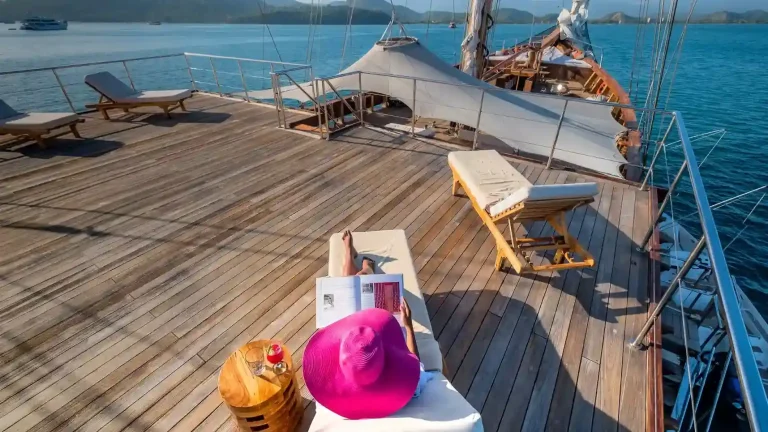
A luxury phinisi is a traditional Indonesian wooden sailing vessel rebuilt or fitted out with higher-end cabins, en-suite bathrooms, and a more refined onboard service level than a standard budget liveaboard, and it remains the classic way to combine a Rinca Island Komodo dragon trek with multi-day comfort at sea.
What Makes a Phinisi “Luxury”?
The phinisi hull design and rigging style are traditional, but the fit-out varies enormously between boats. What separates a “luxury” phinisi from a standard one generally comes down to a handful of concrete factors rather than marketing language:
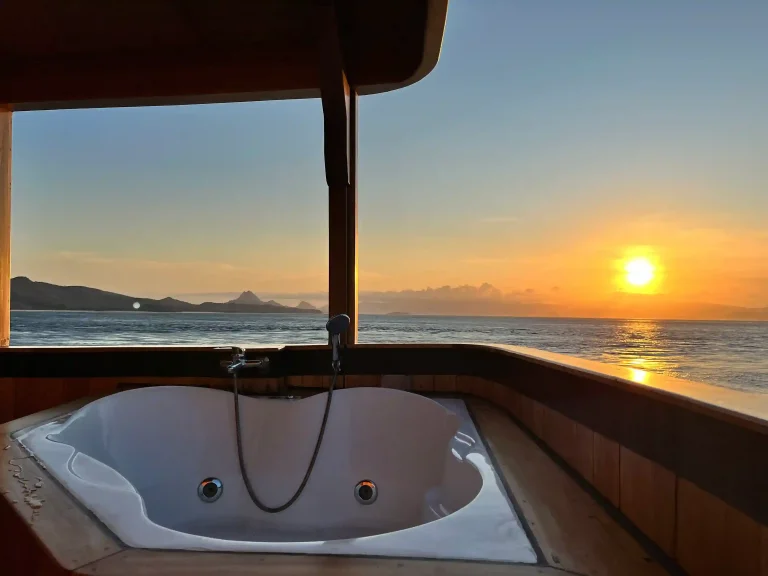
- Cabin size and privacy — private en-suite bathrooms, proper beds rather than bunks, and air conditioning that runs reliably overnight.
- Crew-to-guest ratio — more crew per guest generally means better service and more attentive meal preparation.
- Deck space and shade — a well-designed upper deck for relaxing between excursions matters more on a multi-day trip than a single-day charter.
- Onboard dining quality — freshly prepared meals with some menu variety, rather than repetitive basic catering.
We do not name or endorse specific third-party phinisi vessels or operators on this page, since boat availability, condition, and management change over time, and we’d rather point you to a current, verified booking channel than list a boat name that may no longer reflect the same standard by the time you read this.
Why a Phinisi Suits a Rinca Island Trip
Rinca is one stop within a broader Komodo National Park route that most travelers combine with Padar and often Komodo Island itself. A phinisi’s slower cruising style and overnight cabins make it the natural vessel for this kind of multi-stop, multi-day itinerary, in contrast to a speedboat, which is built for a fast same-day crossing rather than overnight comfort. See our 5-day Rinca & Komodo itinerary and 3D2N tour package for how a phinisi trip is typically structured.
Phinisi vs. Catamaran vs. Speedboat for This Route
A phinisi generally offers more atmosphere and a more traditional sailing experience than a catamaran, at the cost of a slower crossing speed and, on some older vessels, less stability in swell than a modern catamaran hull. If comfort in rough water is your top priority, compare against our catamaran charter guide. If speed and a single-day format matter most, see our speedboat charter guide instead.
What to Ask Before Booking a “Luxury” Phinisi
- How many cabins and guests does the boat carry, and what is the crew-to-guest ratio?
- Are bathrooms private en-suite, or shared between cabins?
- Does air conditioning run through the night, not just during generator hours?
- What is the boat’s age and most recent refit or maintenance date?
- Are photos and reviews you’re shown current, or from a previous season?
A boat marketed as “luxury” without clear, verifiable answers to these questions is worth treating with some skepticism — the word itself isn’t regulated, so the specifics matter more than the label.
Booking a Luxury Phinisi Charter
For current phinisi and liveaboard options with verified, up-to-date availability, see the Komodo Luxury phinisi charter page or Komodo liveaboard listings. We do not publish fixed pricing here since it varies by boat, cabin type, season, and group size — current rates are maintained directly on the linked pages.
Typical Phinisi Cabin Layouts
Phinisi vessels used for Komodo charters range from small boats with two or three cabins to larger ships with a dozen or more, and cabin configurations vary from simple twin bunks to master suites with king beds and private balconies on higher-end vessels. Larger cabin counts generally suit group or open-trip bookings where you’re sharing the boat with other travelers, while smaller-cabin vessels are more often chartered privately by a single group. Neither format is inherently better — it depends on whether you want a shared social atmosphere or full privacy for your group.
Best Season for a Phinisi Charter
Dry season months (roughly April through November) generally bring calmer conditions for phinisi sailing and better visibility for the snorkeling stops typically included on multi-day routes. The wetter months (December through March) are still sailed, but expect captains to adjust routing more frequently in response to conditions, which is a normal and sensible practice rather than a sign of a poorly run trip.
Frequently Asked Questions About Luxury Phinisi Charters for Rinca Island
What is a phinisi boat?
A traditional Indonesian wooden sailing vessel, originally used for interisland trade, now widely adapted for tourism and liveaboard cruises around Komodo National Park.
Is a phinisi comfortable for multi-day trips?
Higher-end phinisi vessels with private en-suite cabins and reliable air conditioning can be very comfortable; standard budget phinisi vary more in comfort level.
Is a phinisi better than a catamaran for a Rinca Island trip?
Phinisi offer a more traditional sailing atmosphere; catamarans generally offer more stability in swell. The better choice depends on your priorities.
How do I verify a phinisi is actually “luxury” before booking?
Ask specific questions about cabin privacy, crew ratio, air conditioning, and the boat’s maintenance history rather than relying on marketing descriptions alone.
Can a phinisi combine Rinca, Padar, and Komodo Island in one trip?
Yes, this is the standard multi-day itinerary structure most phinisi charters in this region are built around.
Plan Your Phinisi Trip with Komodo Luxury
See luxury phinisi Komodo options for current availability, or WhatsApp +62 811-3823-875 with your preferred dates and cabin requirements.
To compare specific vessels, cabin layouts and Rinca trekking routes operated by Komodo Luxury, you can start with their range of multi-day Komodo liveaboard options, which include luxury phinisi boats. Shorter itineraries that still include Rinca landings are listed among their broader Komodo sailing packages, while those planning a bespoke route or full-vessel use can review the details of a private boat charter.
Keep Reading
Boats & Liveaboards
Boat Schedules to Rinca Island & the Last Boat Back
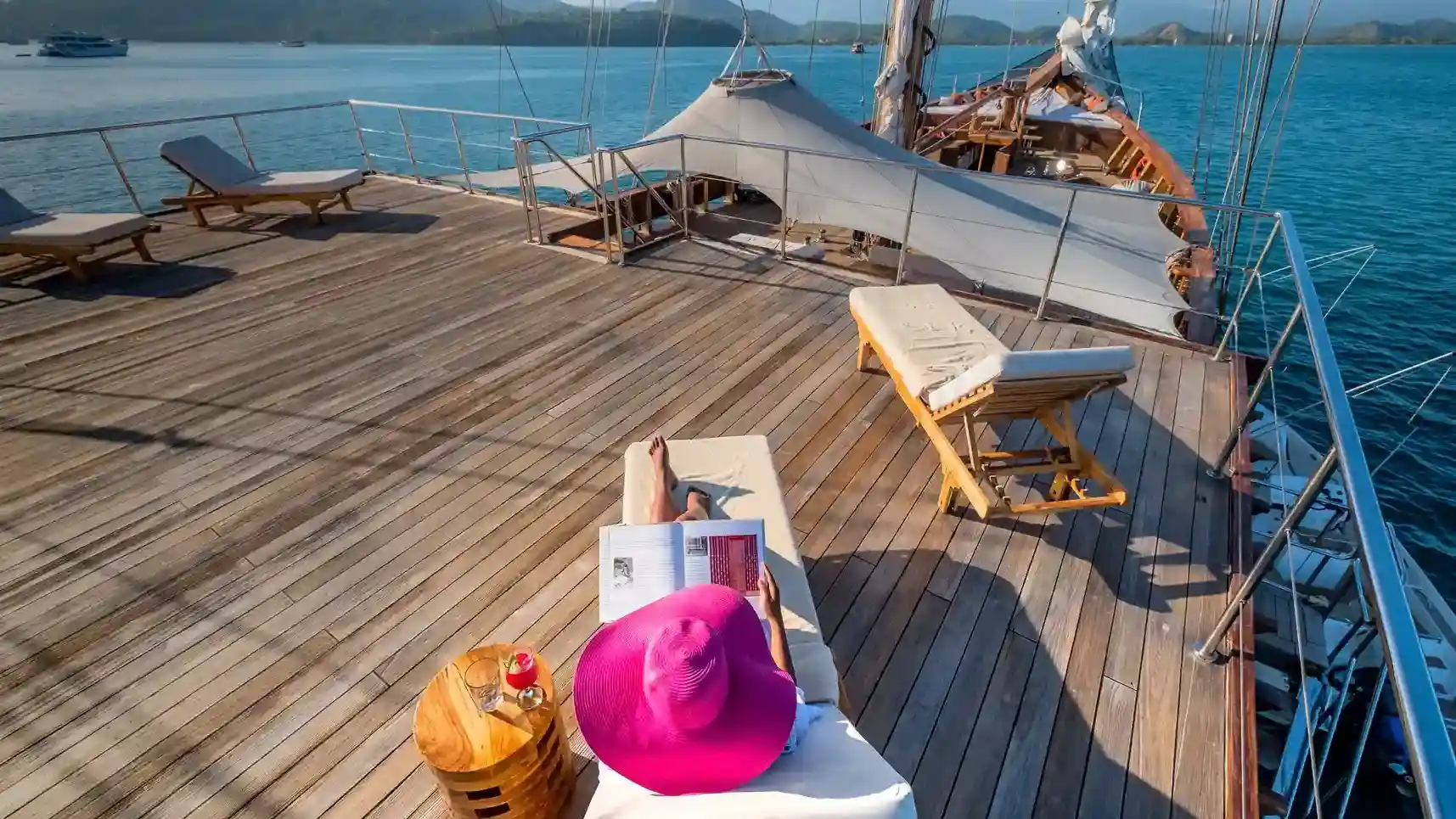
There is no public ferry to Rinca Island — every visitor travels by chartered boat, speedboat, open-trip departure, or liveaboard…
Boats & Liveaboards
Anchoring & Mooring Rules around Rinca Island
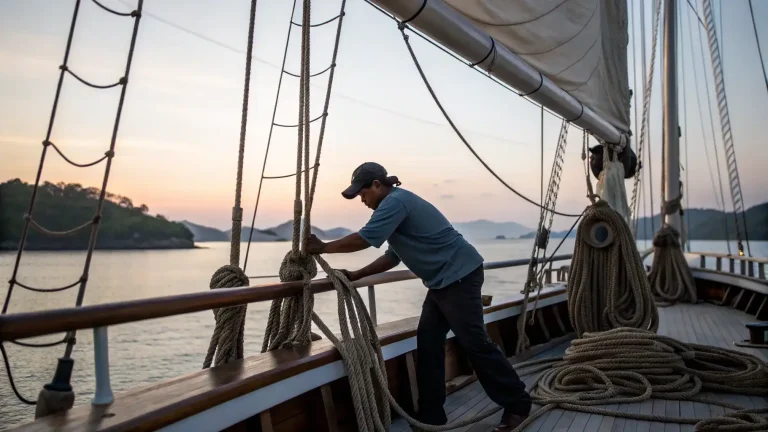
Boats visiting Rinca Island waters within Komodo National Park are expected to use designated mooring points rather than dropping anchor…
Boats & Liveaboards
Seasickness & Health on Komodo Boat Trips
Last updated: August 25, 2026. Seasickness is the most common health complaint on Komodo boat trips, not any dragon-related risk,…