Buffalo, Deer & the Rinca Food Chain
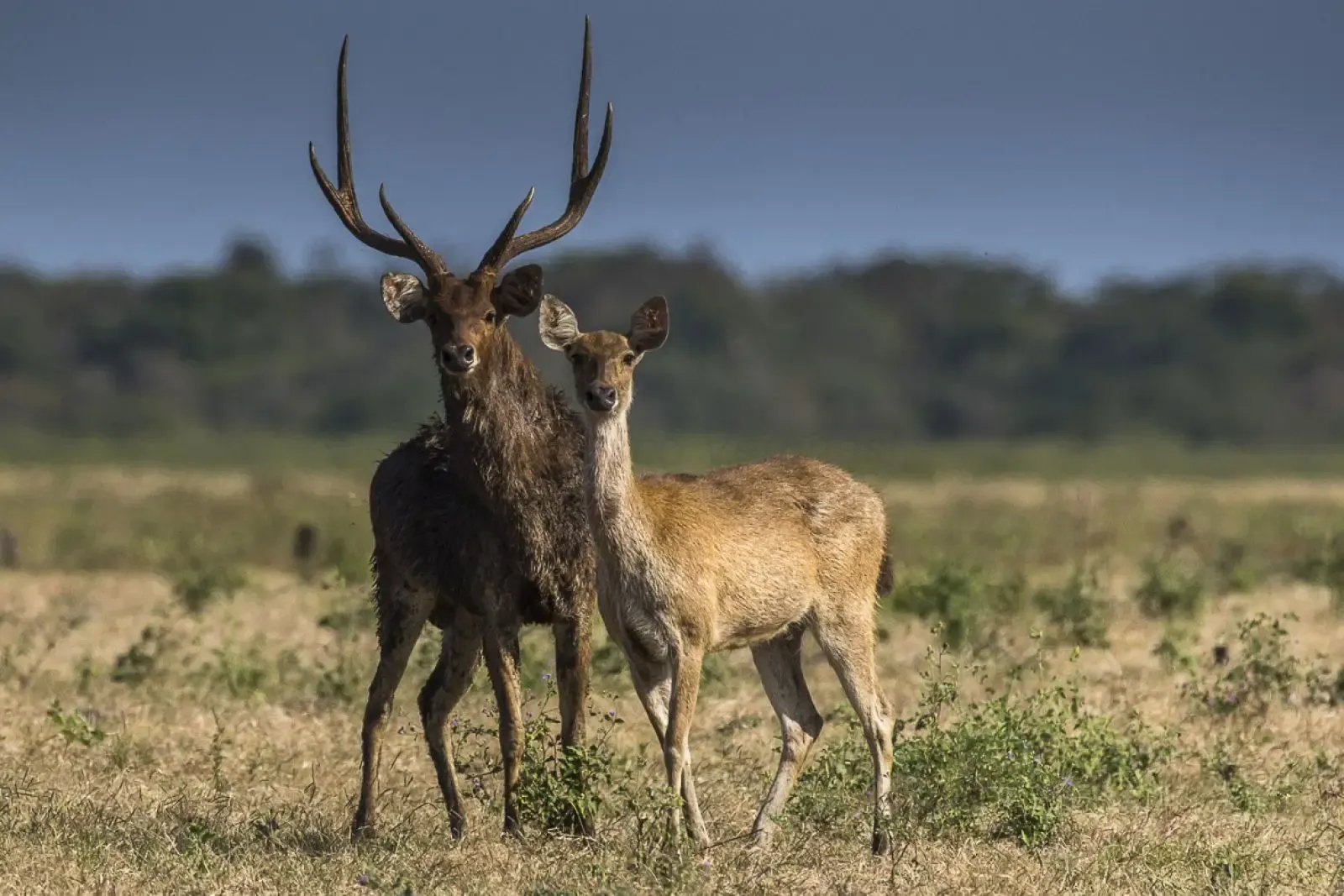
Timor deer and water buffalo are the two most important prey species for wild Komodo dragons on Rinca Island. Scientific field studies at Loh Buaya found deer make up the majority of a dragon’s diet there, with water buffalo taken occasionally as large-bodied prey, alongside wild boar and long-tailed macaques as secondary food sources.
- Which animals actually form the Komodo dragon’s food chain on Rinca
- What documented research says about deer and buffalo as prey
- What you’re realistically likely to see on your trek
Rinca Island’s Komodo dragons do not exist in isolation — the island supports a working predator-prey ecosystem, and understanding it makes a trek here far more interesting than simply hoping to spot a dragon. Peer-reviewed research and park-authority surveys identify five key mammal species on Rinca that matter to this food chain: Timor deer, water buffalo, wild boar, long-tailed macaques, and feral horses. This guide focuses on the two most significant, deer and buffalo, and how they actually function within the island’s ecology.
Timor deer: the dragon’s primary prey
Timor deer (Rusa timorensis) are the most abundant large mammal on Rinca and, according to a field-based diet study conducted in the Loh Buaya valley, made up the largest share of identified prey remains in Komodo dragon diet analysis there — well over half of all identified prey items in that particular study. Deer graze the open savanna grassland that makes Rinca’s terrain so different from parts of Komodo Island, and their presence in visible numbers along the trekking route is one of the more reliable wildlife sightings for visitors, independent of whether a dragon happens to be nearby at the time.
Water buffalo: large, occasional prey
Water buffalo (Bubalus bubalis) are present on Rinca in smaller numbers than deer but represent a significant food source when taken, given their much larger body size. Research on Komodo dragon prey ecology identifies water buffalo as one of the “key prey” species monitored by park authorities alongside deer and wild boar, and notes that adult dragons will opportunistically target buffalo despite the size difference — a testament to the dragon’s hunting capability as the world’s largest living lizard. Buffalo tend to favour wallows and mangrove-adjacent wet ground, so sightings are less predictable along the main trekking route than deer, but rangers know the areas where buffalo activity is more likely on a given day.
Other species in the food chain
Long-tailed macaques (Macaca fascicularis) made up a meaningful secondary share of identified dragon prey in the same Loh Buaya study, and are also simply enjoyable to observe in their own right, often visible moving through trees near the trail. Wild boar and feral horses round out the documented prey base, functioning as alternative food sources when deer and buffalo are less available. None of these species are unique to Rinca within the wider park, but the island’s open terrain makes observing their interactions — grazing patterns, alertness behaviour near dragon territory, herd movement — more visible than in denser forest habitats elsewhere in the region.
How this affects what you’ll actually see on your trek
Expect to see deer with high reliability on almost any trekking route, often grazing calmly at a distance that suggests they have adapted to human presence without habituating to danger from dragons specifically — deer maintain real vigilance around dragon territory even when tourists are nearby. Macaques are also commonly spotted moving through trees. Buffalo sightings are less predictable and more likely near water sources; ask your ranger if buffalo activity has been noted that day, since they read these patterns daily. A dragon actively engaging with prey is a rare, largely chance sighting rather than something any operator can promise, and treating it as guaranteed sets unrealistic expectations.
Why this ecosystem matters for conservation
The Komodo dragon’s survival as a species depends directly on a healthy population of these prey animals; a decline in deer or buffalo numbers on Rinca would threaten the dragon population that draws visitors here in the first place. This is part of why Balai Taman Nasional Komodo actively monitors ungulate populations alongside dragon numbers, and why park rules around vegetation, fire management, and human disturbance exist — they protect the whole food chain, not just the dragons visitors come to see.
How researchers study this food chain
Field researchers document Komodo dragon prey largely through indirect evidence — hair, bone fragments, and other remains found near feeding sites and in dragon scat, alongside direct behavioural observation and dung surveys used to estimate buffalo density in different parts of the island. This methodology is why diet studies report figures as percentages of identified prey remains (such as the deer share found at Loh Buaya) rather than precise headcounts of animals actually eaten, which is genuinely difficult to observe directly for an animal that hunts opportunistically across a wide territory.
Frequently Asked Questions
What animals do Komodo dragons eat on Rinca Island?
Primarily Timor deer, with water buffalo taken occasionally as larger prey. Wild boar, long-tailed macaques, and feral horses serve as secondary or alternative prey sources.
Will I definitely see deer on my Rinca Island trek?
Sightings are very likely, since Timor deer are the most abundant large mammal on the island and graze visibly across the open savanna terrain used by trekking routes.
Are water buffalo dangerous to visitors on Rinca?
Water buffalo are wild animals and should be given space like any wildlife on the trek; your ranger will manage distance and behaviour around any animal encountered, buffalo included.
Can Komodo dragons really kill a water buffalo?
Yes. Research on Komodo dragon prey ecology documents adult dragons opportunistically preying on water buffalo despite the significant size difference between predator and prey.
Are there monkeys on Rinca Island?
Yes, long-tailed macaques are present on Rinca and make up a documented secondary share of Komodo dragon prey in field studies at Loh Buaya.
Why does Rinca have more visible wildlife than some other islands in the park?
Rinca’s open savanna terrain, compared with denser forest elsewhere in the park, gives better sightlines for observing deer, macaques, and occasionally buffalo alongside the dragons themselves.
See our full flora and fauna overview or book a trek with Komodo Luxury’s Komodo boat tour. WhatsApp: +62 811-3823-875.
Last updated: August 25, 2026. Prey ecology facts drawn from peer-reviewed field research on Komodo dragon diet and ungulate monitoring at Loh Buaya, Rinca Island.
Related Rinca Island Guides
- Rinca Island Wildlife: Deer, Buffalo, Birds & Snakes
- Food & Water on a Rinca Island Trip: What to Expect
- Rinca Island Cost: Full Budget Breakdown
- Rinca Island FAQ: 100 Questions Answered
Quick Facts & Related Questions
- Expect Komodo dragons, Timor deer, wild water buffalo, and dry-adapted savanna vegetation, plus mangrove forest around the Loh Buaya tidal creek.
- The wider food chain here includes Timor deer and wild water buffalo alongside the Komodo dragons, plus savanna and coastal birds spotted along the same ranger-led trails.
Keep Reading
Komodo Dragons & Wildlife
Birdwatching on Rinca Island: Species & Best Spots
Birdwatching on Rinca Island is a secondary but genuine draw alongside the Komodo dragon trek — the island's savanna, mangrove…
Komodo Dragons & Wildlife
Rinca Island with Kids & Seniors: Safety Tips
Rinca Island can work well for families with children and for seniors, provided you choose the short trek (~1.5–2 km,…
Komodo Dragons & Wildlife
Rinca or Komodo Island: Terrain, Crowds, Crossing, Cost
Rinca Island generally wins for a first, dragon-focused visit: its open savanna gives better sightlines, its ranger trails tend to…