Rinca’s Role inside Komodo National Park
Last updated: August 25, 2026.
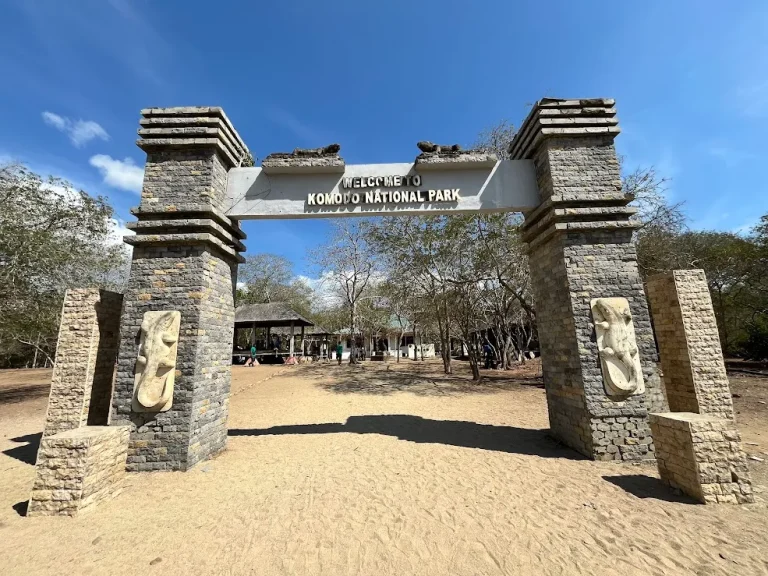
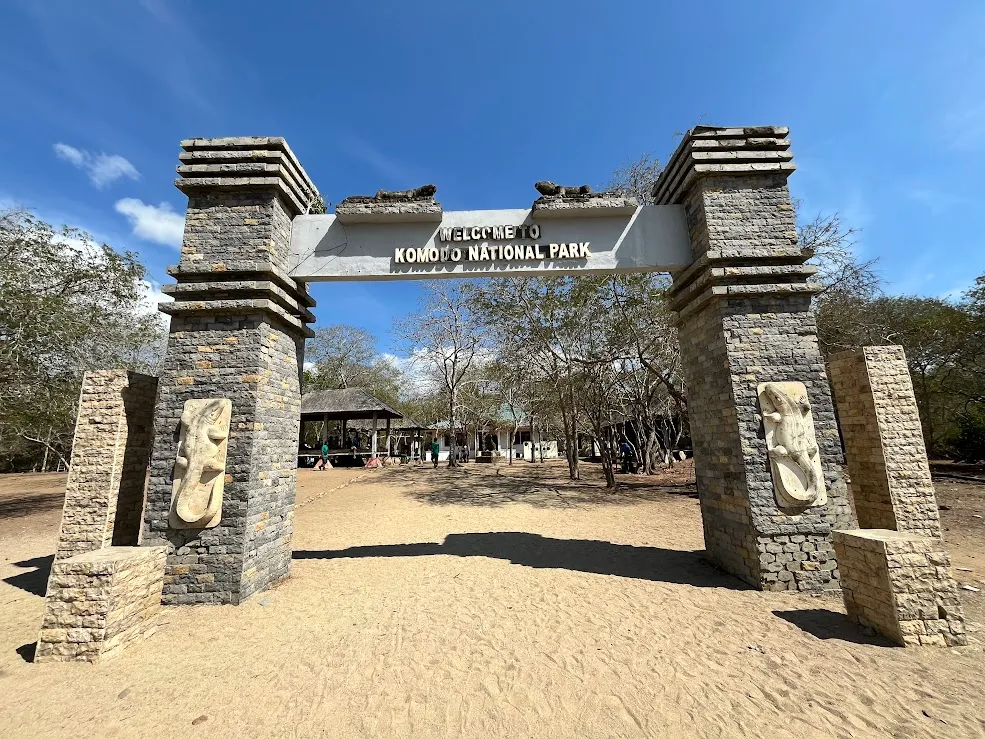
Rinca Island is one of the core islands managed inside Komodo National Park, a UNESCO World Heritage Site administered by Balai Taman Nasional Komodo, and it functions as one of the park’s two main Komodo dragon-viewing zones alongside Komodo Island itself.
Komodo National Park’s Institutional Structure
Komodo National Park is a government-protected conservation area in East Nusa Tenggara, Indonesia, managed by Balai Taman Nasional Komodo under Indonesia’s Ministry of Environment and Forestry. The park was designated in 1980 and inscribed as a UNESCO World Heritage Site in 1991, covering a cluster of islands including Komodo, Rinca, Padar, and numerous smaller islets, along with the surrounding marine area. Management responsibilities include wildlife conservation, visitor access control, fee collection, and enforcement of park regulations.
Rinca’s Role Within the Park’s Zoning
Within the park’s broader area, different islands and zones serve different visitor purposes. Rinca is designated as a wildlife-viewing and trekking zone centered on the Loh Buaya ranger station, where infrastructure exists specifically to manage guided visitor access to Komodo dragon habitat. This contrasts with zones like Padar, which functions primarily as a scenic viewpoint with no equivalent trekking infrastructure, and with the park’s marine zones, managed separately for diving and snorkeling activity.
Why Visitor Access Is Managed the Way It Is
The mandatory ranger-guide requirement, the fixed trail loops, and the current SiOra e-ticket and quota system all stem from the park’s core institutional mandate: balancing conservation of a vulnerable species and its habitat against tourism access. The park-wide 1,000-visitor daily cap, split into three sessions, exists specifically to prevent uncontrolled visitor volume across the park’s islands, Rinca included, rather than being a Rinca-specific restriction.
How Rinca Compares Institutionally to Komodo Island
Both Rinca and Komodo Island fall under the same park authority, the same fee schedule, and the same overall management framework. The practical difference between them is operational rather than institutional: Rinca’s Loh Buaya station and Komodo Island’s ranger infrastructure are separately staffed and separately routed, but both operate under identical rules set by Balai Taman Nasional Komodo. Neither island has a distinct legal or regulatory status within the park compared with the other.
Conservation Priorities on Rinca
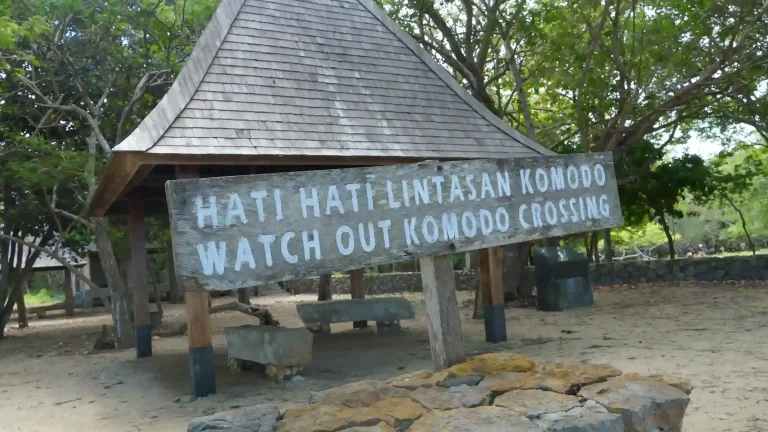
As with the rest of the park, Rinca’s management priorities center on protecting the Komodo dragon population and its habitat, alongside other resident wildlife such as Timor deer, wild horses, and water buffalo. Visitor infrastructure — the ranger station, trail boardwalks in places, and the guided-trek requirement — is designed to concentrate human presence into managed paths rather than allowing dispersed, uncontrolled foot traffic across sensitive habitat.
Why This Institutional Context Matters for Visitors
Understanding that Rinca operates within a single, unified park management structure explains several practical realities: why fees are identical across islands, why a ranger-guide is non-negotiable everywhere in the park, and why the visitor quota is calculated park-wide rather than per island. It also explains why rules can and do change — as they did with PP No. 36/2024 and the April 2026 introduction of SiOra — since they originate from a single regulatory body rather than being set independently by each island.
How Rules Have Changed Over Time
Komodo National Park’s fee and access rules have been revised more than once in recent years, most significantly with Government Regulation PP No. 36/2024, which reset the entrance fee structure effective 30 October 2024, and the April 2026 introduction of the SiOra e-ticket system for advance booking. Both changes apply uniformly across the park, Rinca included, illustrating how the park’s single management structure means a regulatory update affects every island at once rather than being phased in island by island.
Rinca’s Place in the Park’s Wider Ecosystem
Beyond its role as a visitor-access zone, Rinca contributes to the park’s broader conservation function as one of the limited number of islands worldwide where Komodo dragons exist in a genuinely wild, self-sustaining population, alongside Komodo Island, parts of Flores, and a few smaller islets. This ecological role — not tourism infrastructure — is the underlying reason the park exists and the reason its management prioritizes habitat protection over unrestricted visitor access.
Frequently Asked Questions About Rinca’s Role in Komodo National Park
Who manages Rinca Island?
Balai Taman Nasional Komodo (the Komodo National Park Authority), under Indonesia’s Ministry of Environment and Forestry, as part of the wider Komodo National Park management structure.
Is Rinca part of the same UNESCO World Heritage Site as Komodo Island?
Yes. Komodo National Park, including Rinca, Komodo Island, and Padar, was inscribed as a UNESCO World Heritage Site in 1991.
Does Rinca have different rules than Komodo Island?
No. Both operate under the same park-wide fee schedule, quota system, and mandatory ranger-guide requirement set by the same park authority.
When was Komodo National Park established?
The park was designated in 1980 and inscribed as a UNESCO World Heritage Site in 1991.
Why is a ranger-guide mandatory on Rinca?
It stems from the park’s core conservation mandate — managing visitor access to protect both visitors and Komodo dragon habitat, applied consistently park-wide, not as a Rinca-specific rule.
Learn More About Visiting Rinca
See our Rinca Island Guide homepage for a full overview, or our Rinca vs. Komodo vs. Padar comparison for how the islands differ in practice. To book a guided visit, see Komodo boat tour options.
Related Rinca Island Guides
- Rinca Island Cost: Full Budget Breakdown
- Rinca Island FAQ: 100 Questions Answered
- Best Time for Rinca Island
- Rinca Island Entrance Fee, Permits & Quota
Quick Facts & Related Questions
- The whole island falls inside Komodo National Park’s core conservation zone, so no private land development, hotels, or resorts are permitted on it.
- Rinca’s position inside the park is shaped partly by access: with no airstrip or bridge of its own, every visitor reaches the island the same way, by boat from Labuan Bajo.
Keep Reading
Travel Journal
Photographing Rinca Island: Gear, Light & Ethics
For photographing Rinca Island, a mid-range zoom (roughly 70-200mm equivalent) covers both wildlife at a safe distance and landscape shots…
Travel Journal
Rinca Island Visitor Quota: How the Daily Limit Works
Komodo National Park limits visitors to 1,000 people per day across the whole park, split into three scheduled sessions of…
Travel Journal
The Future of Eco-Tourism on Rinca Island
Last updated: August 25, 2026. Eco-tourism on Rinca Island is shaped by a straightforward tension that isn't going away: the…