
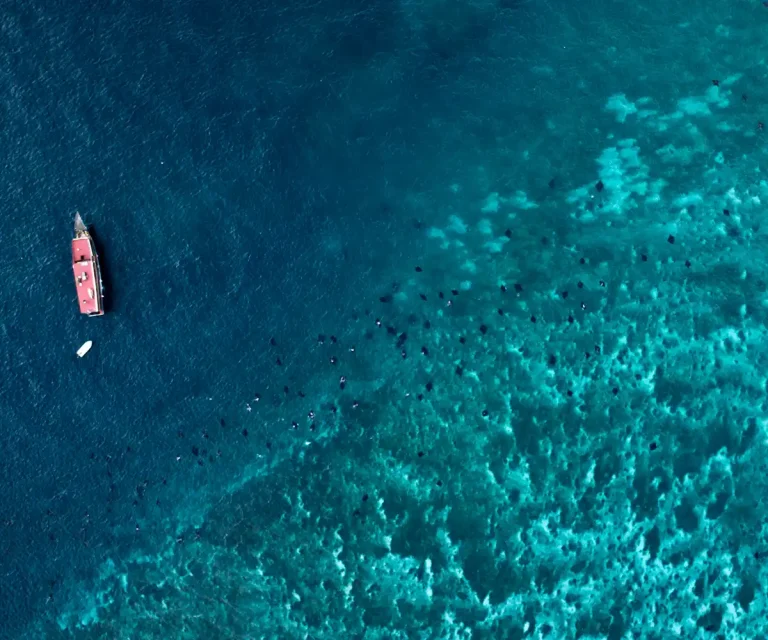
Manta Point & Reef Snorkelling on a Rinca Trip
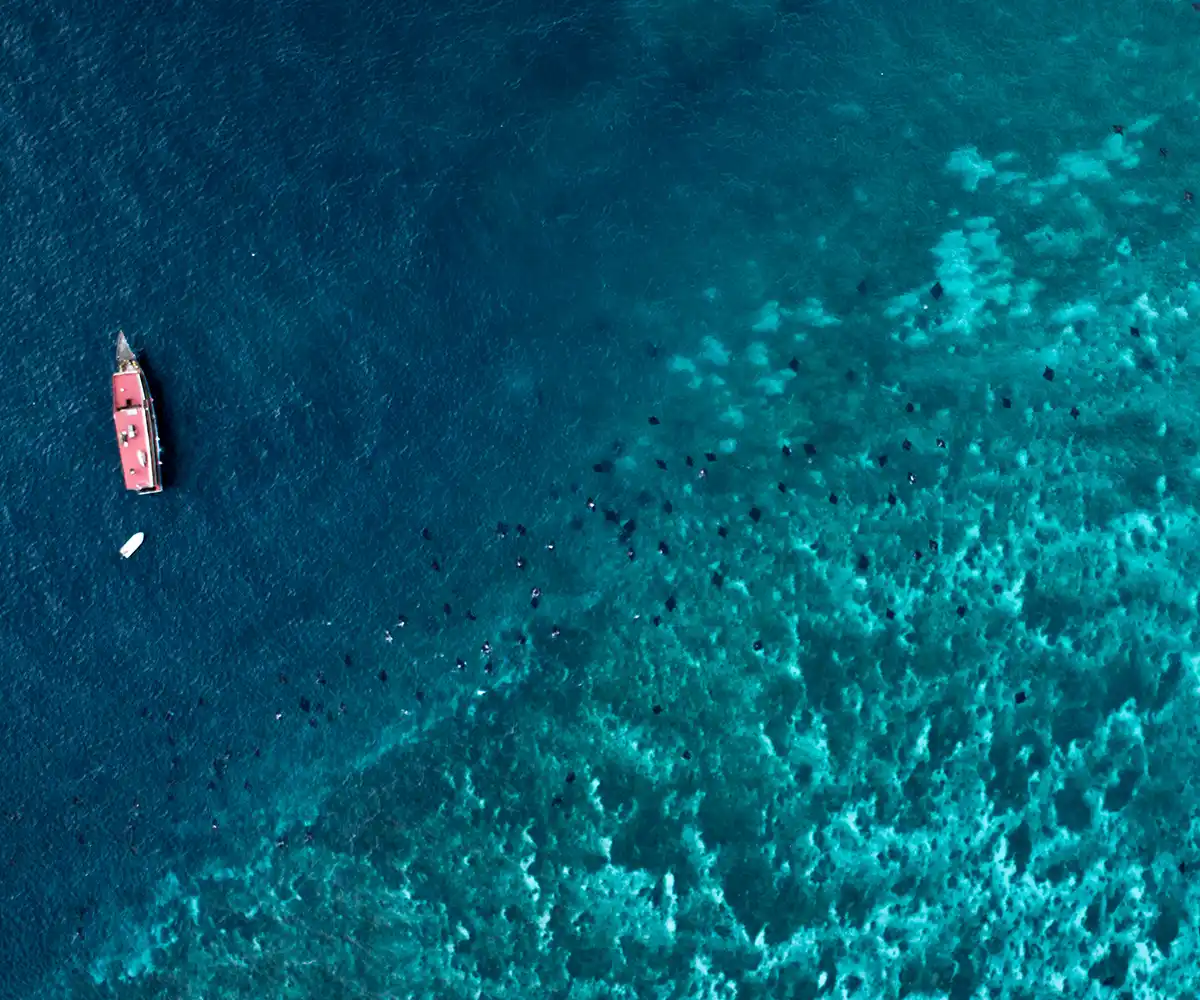
Manta Point, one of Komodo National Park’s best-known dive and snorkel sites, is commonly added to multi-stop itineraries alongside the mandatory Rinca Island trek, rather than being located on Rinca itself. Manta ray sightings here are seasonal and current-dependent, not guaranteed on any single visit, and the site’s typically stronger current makes it a guided, tide-timed stop rather than a casual swim.
Where Manta Point sits relative to Rinca Island
Manta Point lies within the broader Komodo National Park marine area, reachable by boat as part of a multi-stop day trip or liveaboard itinerary that also includes the Rinca land trek. It is not adjacent to Rinca’s jetty — itineraries combining both typically treat them as separate legs of the same day or trip, connected by boat transit time that varies by specific route and vessel.
What makes Manta Point a manta ray site
Manta rays are drawn to certain current-rich channels where plankton concentrates, and Komodo National Park’s Manta Point sites are known cleaning-station and feeding areas where the animals can be reliably (though never guaranteedly) encountered by snorkelers and divers. Sightings vary by season, time of day, and current conditions on the specific day — no operator can promise a manta encounter.
Snorkeling versus diving at Manta Point
Both snorkeling and diving are offered at Manta Point sites, with the choice largely depending on your certification level and comfort with current. Snorkelers stay at the surface and can still see mantas passing below or near the surface at accessible sites; certified divers can descend to cleaning stations for closer, longer encounters. Both approaches require a guide familiar with that day’s current conditions.
Current and safety considerations at Manta Point
Manta Point sites are known for stronger-than-average current, which is part of what draws the plankton mantas feed on — this makes it a genuinely different risk profile from a calm reef stop. As covered in Currents, Jellyfish & Marine Hazards around Rinca, guided, tide-timed entry and a clear briefing on current direction are standard and necessary precautions here, more so than at most other park snorkel sites.
Building Manta Point into a Rinca-focused itinerary
Most itineraries that combine Rinca with Manta Point do so as part of a full- or multi-day route: an early Rinca trek, followed by a boat transit and afternoon snorkel/dive stop at Manta Point, or a separate day within a longer liveaboard itinerary. Confirm with your operator whether Manta Point is included in your specific booking or offered as an add-on, since not every Rinca-focused day trip includes it by default.
Best season for a Manta Point encounter
Manta sighting likelihood varies seasonally with current and plankton patterns across the park; ask your specific operator about recent sighting frequency for the season you’re travelling in rather than relying on a generic year-round guarantee, since this varies by site and year.
Reef conditions beyond Manta Point on a Rinca trip
Beyond the dedicated manta site, a typical Rinca-inclusive itinerary may add a calmer reef snorkel stop with better visibility and less current — a useful contrast for less experienced snorkelers or families who want reef life without Manta Point’s stronger current demands.
What a manta encounter actually looks like
When conditions align, manta rays at cleaning stations move slowly and repeatedly through a fairly confined area, allowing snorkelers and divers extended observation time rather than a single fleeting pass — this is part of why cleaning-station sites specifically (rather than open-water manta sightings elsewhere) are so highly regarded among underwater photographers and wildlife enthusiasts.
Respecting manta rays during an encounter
Standard, guide-enforced etiquette around mantas includes maintaining a respectful distance (typically several metres), never touching or chasing an animal, and avoiding blocking a manta’s path of travel at a cleaning station. Mantas are sensitive to disturbance, and poor visitor behaviour at popular sites has been documented elsewhere in the world to reduce return visits by the animals — following guide instructions here protects both the experience and the site’s long-term viability.
Equipment considerations for a Manta Point stop
A well-fitted mask and snorkel, fins suited to potentially stronger current (a slightly stiffer fin blade helps maintain position against light current), and a rash guard or thin wetsuit for extended time in the water are the practical gear considerations specific to this site, beyond the general packing list covered in Rinca Island Packing Guide.
Combining Manta Point with a Rinca-Padar itinerary
A well-designed multi-day itinerary can sequence Manta Point alongside Rinca’s trek and Padar’s viewpoint without excessive backtracking, since all three sit within reasonably proximate stretches of the park depending on exact routing. Ask your operator to confirm the sequencing and approximate transit times between stops when booking a combined itinerary.
Frequently asked questions about Manta Point on a Rinca trip
Are manta ray sightings guaranteed at Manta Point?
No. Manta rays are wild animals and sightings depend on season, current, and time of day; no reputable operator can guarantee an encounter on any given visit.
Do I need diving certification to see mantas at Manta Point?
No, snorkeling is a valid way to see mantas at accessible sites, though certified diving allows closer, longer encounters at cleaning stations below the surface.
Is Manta Point suitable for beginners?
The stronger current at Manta Point makes it more demanding than a typical calm reef stop; beginners should be comfortable with guided drift-snorkel technique and disclose any concerns to their guide before entering the water.
Can Manta Point be added to a one-day Rinca Island trip?
Depending on route and boat speed, some single-day itineraries do combine both stops, though this makes for a fuller day; confirm feasibility and timing with your specific operator.
Setting realistic expectations before you go
The single most important mindset for a Manta Point stop is treating a sighting as a genuine possibility, not a promise — travellers who arrive with that framing tend to enjoy the broader reef and current experience regardless of outcome, while those expecting a guaranteed encounter can find a quiet day disproportionately disappointing despite otherwise good conditions.
Last updated: August 25, 2026.
Manta Point and reef stops are commonly built into a Komodo sailing trip or multi-day Komodo liveaboard itinerary alongside the Rinca trek. For current and tide safety detail, see our Currents, Jellyfish & Marine Hazards around Rinca.
Related Rinca Island Guides
- Rinca’s Underwater Highlights: Diving & Snorkelling
- Rinca Island Cost: Full Budget Breakdown
- Rinca Island FAQ: 100 Questions Answered
To experience Manta Point in context with the Rinca Island trek, look for itineraries that combine guided snorkelling with the standard Komodo dragon walk. Komodo Luxury includes this site on selected one-day Komodo sailing trip routes from Labuan Bajo, as well as longer Komodo liveaboard options and flexible private boat charter plans, which allow timings to be adjusted around currents and seasonal manta activity.
Keep Reading
Boats & Liveaboards
Boat Schedules to Rinca Island & the Last Boat Back
There is no public ferry to Rinca Island — every visitor travels by chartered boat, speedboat, open-trip departure, or liveaboard…
Travel Journal
Photographing Rinca Island: Gear, Light & Ethics
For photographing Rinca Island, a mid-range zoom (roughly 70-200mm equivalent) covers both wildlife at a safe distance and landscape shots…
Costs, Fees & Booking
Cash, Cards & Tipping on Rinca Island
You need very little cash on Rinca Island itself, since park tickets are now booked and paid online through SiOra.…