
Currents, Jellyfish & Marine Hazards around Rinca
The main marine hazards around Rinca Island are strong, tide-driven currents in the narrow channels toward Komodo and Padar — not jellyfish, which are an inconsistent, seasonal concern rather than a defining risk. Guided, tide-timed snorkeling and basic current awareness address most of what visitors need to know before entering the water here.
Why currents matter more than most other risks near Rinca
Komodo National Park’s channels funnel a large volume of tidal exchange between the Flores Sea and the Sumba Strait through relatively narrow gaps around Rinca, Komodo, and Padar. That funnelling effect means current speed can differ dramatically between sites only a few kilometres apart, and can flip direction within an hour as the tide turns — a genuinely different hazard profile from a typical calm tropical reef.
Rinca Island currents and tides for snorkelers
Reputable operators plan snorkel stops around slack tide (the period of minimal current flow between tide changes) rather than fighting a moving channel. If you’re snorkeling independently rather than as part of a guided stop, check the day’s tide table and avoid entering known channel current zones outside slack water — this is the single most important practical precaution for this specific location.
Can you swim around Rinca Island?
Swimming happens at designated, guide-selected stops rather than freely anywhere along the coastline. Near the main jetty and ranger-station area, swimming is not the primary activity (the visit there is a land trek); snorkel-specific stops elsewhere in the park are where guided swimming typically occurs.
Is drift snorkelling near Rinca risky?
Drift snorkelling — deliberately entering upcurrent and letting the water carry you along a route, then exiting downcurrent — is the standard technique used by guides in current-prone sites here, and it is safe when properly briefed and supervised. The risk comes from attempting to snorkel against a current or in an unfamiliar channel without a guide’s assessment of that day’s flow.
Jellyfish season around Rinca Island
Jellyfish presence in Komodo National Park waters is seasonal and site-dependent rather than a constant year-round hazard. There is no single verified “jellyfish season” figure this guide will state without a directly citable, dated source — ask your operator about current conditions on the day, and a rash guard is a reasonable low-cost precaution regardless of season.
Underwater visibility near Rinca
Visibility varies by site, tide state, and season. Wind-driven chop, most pronounced during the dry season’s peak trade winds (roughly August-September), can reduce visibility even when current itself is mild, by stirring surface sediment and creating surface glare that limits how far light penetrates.
Marine stingers and other in-water hazards
Beyond jellyfish, standard tropical-reef precautions apply: avoid touching coral or unfamiliar marine life, wear foot protection when wading over reef shallows, and disclose any allergy history to your guide before a snorkel stop. None of these are unique to Rinca specifically, but they compound with the current risk already discussed above.
How guides manage current risk on a snorkel stop
A competent guide will brief the group on that day’s specific current direction and strength before entry, position a support boat to pick up drifting swimmers at the exit point, and hold a headcount throughout the stop. If a guide skips this briefing or seems uncertain about the day’s conditions, that is a legitimate reason to ask more questions before entering the water.
Why this specific stretch of water behaves differently from open reef diving elsewhere
Much of Indonesia’s popular reef diving and snorkeling happens in relatively open, less current-affected water. Komodo National Park’s geography — a cluster of islands separated by narrow, deep channels connecting two distinct seas — is structurally different, and that difference is exactly what produces both the park’s famously nutrient-rich, biodiverse waters and its stronger, more variable currents. The same current pattern that makes the ecosystem thrive is what visitors need to respect.
Reading the water before you enter
Visible surface indicators — standing waves, visible boils or upwellings, a consistent directional ripple pattern — are signs experienced local guides read before committing a group to a snorkel entry. Travellers without this local knowledge should treat any hesitation or extra caution from their guide as informative, not overcautious, and avoid pressuring a guide to enter water they’ve flagged as questionable for that day.
What to do if you’re caught in a current
The standard, guide-taught response to being caught in an unexpected current is to avoid swimming directly against it — instead, swim perpendicular to the current’s direction to work out of its flow, signal your boat or guide, and conserve energy rather than panicking and thrashing against a stronger force than you can outswim. This is exactly why guided, briefed snorkeling with a support boat present is the standard and recommended approach in these waters rather than independent entry.
Seasonal current variation around Rinca
Current strength and character can shift somewhat with the broader monsoon season alongside tide — wind-driven surface current adds to tidal flow, particularly during the dry season’s peak trade winds (roughly August-September, as covered in our Rinca Island Weather: Rainfall, Heat, Sea & Currents). This compounding effect is another reason experienced local guides, rather than a generic seasonal chart alone, are the most reliable source for a specific day’s actual conditions.
Frequently asked questions about Rinca Island marine hazards
Are the currents around Rinca Island dangerous?
They can be strong in narrow channels, particularly around tide changes, which is why guided, tide-timed snorkeling is the standard and recommended approach rather than independent swimming in unfamiliar current zones.
Is it safe to snorkel near Rinca Island without a guide?
Not recommended in current-prone channel areas. A local guide’s knowledge of that specific day’s tide and current state is a meaningful safety factor that self-directed snorkeling lacks.
What time of day has the calmest water near Rinca Island?
Slack tide — the period around high or low tide when current flow is minimal — varies daily based on the tide table, not a fixed clock time; your operator can tell you the day’s slack-tide window.
Do I need a wetsuit for jellyfish protection near Rinca Island?
A rash guard is a reasonable, lightweight precaution most visitors use; a full wetsuit is not typically necessary given the warm water temperature unless you have a specific sensitivity concern.
Questions worth asking your operator before a snorkel stop
Before entering the water at any Rinca-area snorkel site, reasonable questions include: what is today’s current direction and strength, is this slack tide or moving water, where is the exit point and support boat positioned, and what is the plan if someone gets separated from the group. A guide’s confident, specific answers to these questions are a good sign of genuine local expertise.
Last updated: August 25, 2026.
For seasonal sea-condition detail, see Rinca Island Weather: Rainfall, Heat, Sea & Currents, and for a specific reef and manta-viewing itinerary, see Manta Point & reef snorkelling on a Rinca trip. Guided snorkel stops are standard on any Komodo sailing trip.
Related Rinca Island Guides
- Supporting Communities around Rinca Island
- Diving Around Rinca: Castle Rock, Crystal Rock, Batu Bolong
- Romantic Cruises Around Rinca & Komodo
Quick Facts & Related Questions
- Guided, tide-timed snorkeling around this part of the park is manageable for reasonably confident swimmers rather than complete beginners, given the current conditions the marine-hazards page describes.
- Can you swim near Rinca? Swimming near Rinca itself is not the main draw — the marine hazards page covers the currents and conditions to check before getting in the water anywhere in this part of the park.
- The main marine hazards around Rinca are strong, tide-driven currents in the narrow channels toward Komodo and Padar, not jellyfish, which are an inconsistent, seasonal concern.
Keep Reading
Boats & Liveaboards
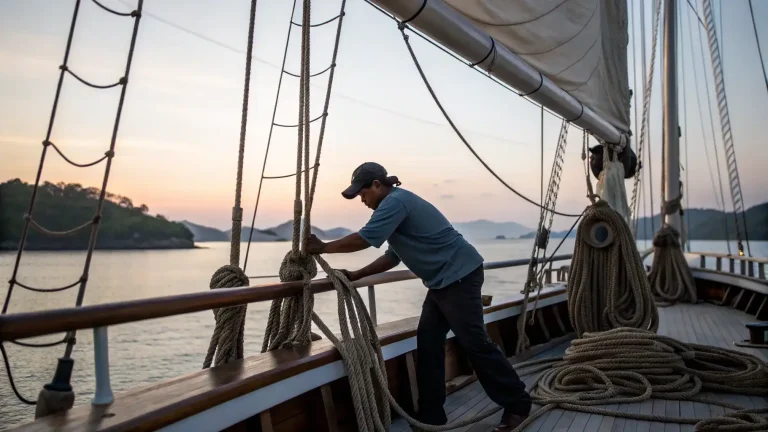
Boat Schedules to Rinca Island & the Last Boat Back
There is no public ferry to Rinca Island — every visitor travels by chartered boat, speedboat, open-trip departure, or liveaboard…
Travel Journal
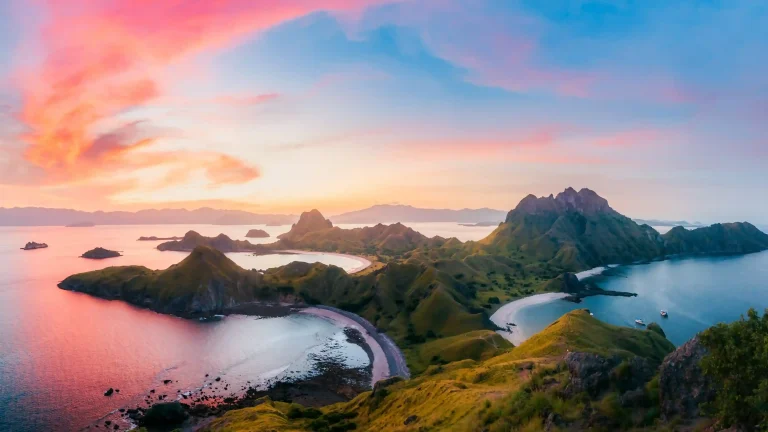
Photographing Rinca Island: Gear, Light & Ethics
For photographing Rinca Island, a mid-range zoom (roughly 70-200mm equivalent) covers both wildlife at a safe distance and landscape shots…
Costs, Fees & Booking
Cash, Cards & Tipping on Rinca Island
You need very little cash on Rinca Island itself, since park tickets are now booked and paid online through SiOra.…